Scrolling through math homework or seeing someone mention “expanded form” might leave you thinking, “Wait… what does that mean?”
You’re not alone! At first, it sounds complicated, but it’s actually simple once you break it down.
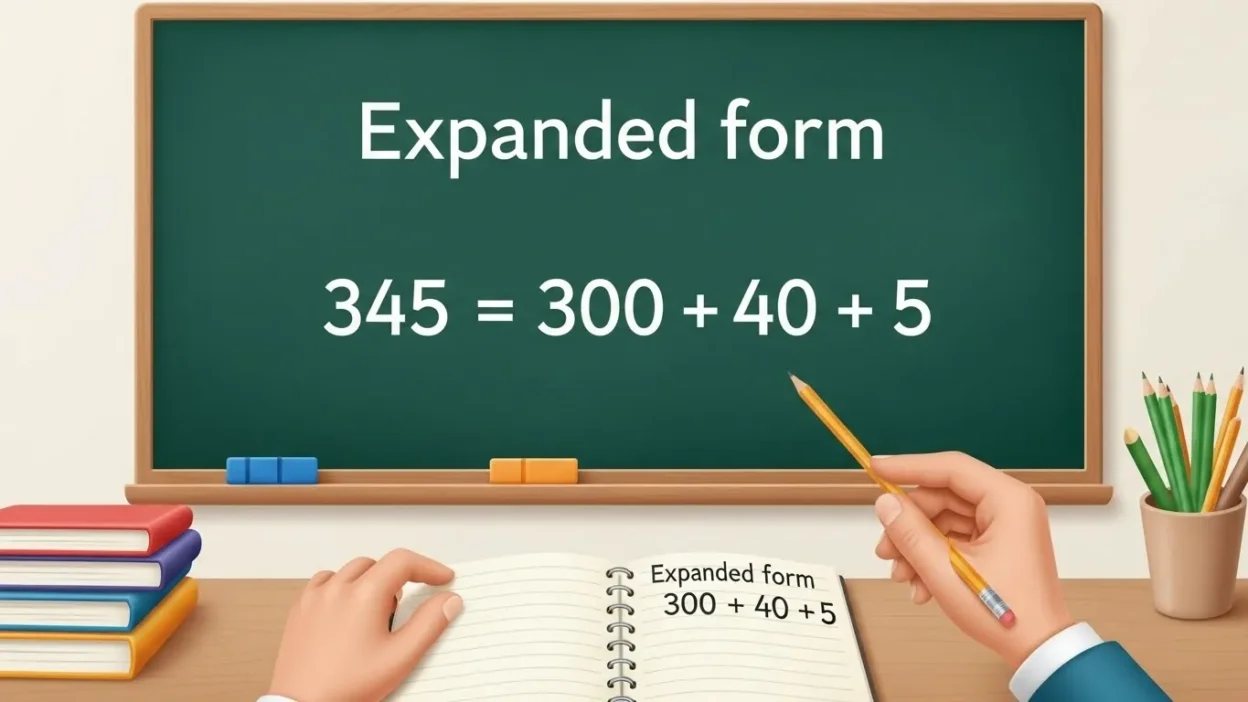
Quick Answer: Expanded form means showing a number as the sum of its place values.
It’s a friendly and explanatory way of breaking numbers apart to see what each digit represents.
🧠 What Does Expanded Form Mean in Text?
In everyday language, expanded form refers to writing a number to show the value of each digit. Instead of just writing 347, in expanded form, you’d write 300 + 40 + 7. It’s like taking the number apart to understand exactly what each digit contributes.
Example:
- Number: 506
- Expanded form: 500 + 0 + 6
In short: Expanded form = Showing a number’s digits by place value = Breaking numbers down clearly.
📱 Where Is Expanded Form Commonly Used?
Expanded form is mainly seen in:
- 📚 Math homework and textbooks
- 📝 Educational apps
- 🖥️ Online learning platforms
- 👩🏫 Teaching or tutoring sessions
Tone/Usage: Formal in schoolwork, casual when explaining to friends, and social-media–friendly in educational content for kids or learners.
💬 Examples of Expanded Form in Conversation
Here are some realistic ways you might see it used:
A: “Can you show me 482 in expanded form?”
B: “Sure! It’s 400 + 80 + 2 😄”
A: “I don’t get expanded form…”
B: “It’s just breaking numbers apart. 506 = 500 + 0 + 6 👍”
A: “Expanded form for 231?”
B: “200 + 30 + 1 ✅”
A: “Why do we even use expanded form?”
B: “It helps understand place value and math better 😊”
A: “Is 90 in expanded form 90?”
B: “Yep, 90 = 90, since there’s only tens and no ones 😅”
🕓 When to Use and When Not to Use Expanded Form
✅ When to Use:
- Teaching or learning math
- Explaining numbers to kids
- Breaking down calculations
❌ When Not to Use:
- Formal writing (like reports)
- Quick texting of numbers
- Situations where simplicity matters
| Context | Example Phrase | Why It Works |
| Friend Chat | “482 = 400 + 80 + 2 😄” | Casual & educational |
| Classroom | “Expanded form shows 231 = 200 + 30 + 1” | Clear teaching example |
| Homework | “Write 506 in expanded form” | Formal school instruction |
| Online Quiz | “Type the expanded form of 97” | Short & precise |
🔄 Similar Slang Words or Alternatives
| Term | Meaning | When to Use |
| Standard Form | Writing numbers normally (347) | Everyday numbers, tests |
| Word Form | Writing numbers in words (“three hundred forty-seven”) | Reading practice, spelling |
| Place Value Form | Showing value of digits (same as expanded) | Teaching math basics |
| Decomposed Form | Breaking numbers apart like expanded form | Math exercises, tutoring |
❓ FAQs:
Q1: What is expanded form in simple terms?
A: It’s showing a number as the sum of its digits’ place values.
Q2: Is expanded form used outside math?
A: Rarely. Mostly used in learning and teaching numbers.
Q3: Can a single-digit number have expanded form?
A: Yes! For example, 7 = 7.
Q4: Why is expanded form important?
A: It helps understand place value and makes math concepts easier to visualize.
Conclusion:
Expanded form might seem tricky at first, but it’s a simple, friendly way to break down numbers into their place values.
Whether you’re learning math, helping someone with homework, or making sense of large numbers, knowing the expanded form makes numbers clearer and easier to work with.
Remember: 347 isn’t just 347 it’s 300 + 40 + 7! Understanding this small step can make a big difference in learning numbers effectively.